Watermelon
There are endless questions to ask about food and the complex journey it takes to reach our plates. From farmers and fast food chains to politics and technology, we need to step aside from common conversations about food, and break down barriers few of us know exist. What are the systems trying to feed us, and how do they work?
Here at Sliced, we’re so excited to begin with our Watermelon issue. Few foods spark so much joy as the first watermelon in summer. Yet, beyond occasionally worrying about genetic manipulation, we rarely say anything more about it than how much we love this fruit—and possibly moan about the seeds. But, as you’ll see flicking through our metaphorical pages, the watermelon is as contested as any other food. Its history is complex and its future is up for grabs.
After emancipation, recently freed black people often farmed, ate and sold watermelons in the U.S. South. The fruit had been a central part of their lives during slavery, and remained important in the new social order. But selling watermelons gave them more power, which southern whites saw as challenging the racial hierarchy. In quicktime they transformed the watermelon into a symbol to depict black people as messy and lazy. It became a racist trope which reinforced violent notions that black people were an ‘unwanted public presence’.
This idea exploded in cartoons and media, but depressingly still endures to this day. Not too long ago, the UK Prime Minister Boris Johnson, in a previous profession as a columnist, referred to black people in Africa as having ‘watermelon smiles’. In 2014, Jacqueline Woodson described the pain of having her dislike of watermelon soup turned back on her as a racist joke by a friend on stage at an awards show.
The examples are endless, proving food is as powerful a symbol as any other, and that we need to discuss food in more detail. This is as true for issues in sustainability, agriculture, innovation, nutrition, taste and more, as it is for a food’s place in our culture and history.

The watermelon evokes the essence of summer, and it has exploded as a symbol in pop culture. From brands that endorse its revitalizing qualities to Beyonce’s Drunk In Love, it’s captured our imagination. But Harry Styles has taken this to another level with his summer hit, Watermelon Sugar. Read on to learn how he deploys the watermelon as a powerful symbol for consent and sexual agency.
The watermelon has been coddled. As the climate crisis gets worse, the watermelon faces a struggle to survive in extreme conditions. But innovative approaches to genome mapping and farming could give the watermelon a fighting chance of thriving in these conditions. This is a report from the frontlines of the watermelon’s future.
Watermelon-flavoured drinks and sweets don’t taste much like the real thing. But the natural flavour is actually much like the artificial: the juiciest and most potent taste that can be created for the right price. We take a look at the economic forces that shaped the watermelon’s flavour, and why no watermelon flavour is really ‘natural’.
Many cultures far and wide ascribe all kinds of cleansing, healing qualities to the watermelon. Some even claim it as an aphrodisiac. But amidst the superstitions and myths, it’s unclear how nutritious the watermelon really is. How healthy is the watermelon, and why do we often overstate its benefits?
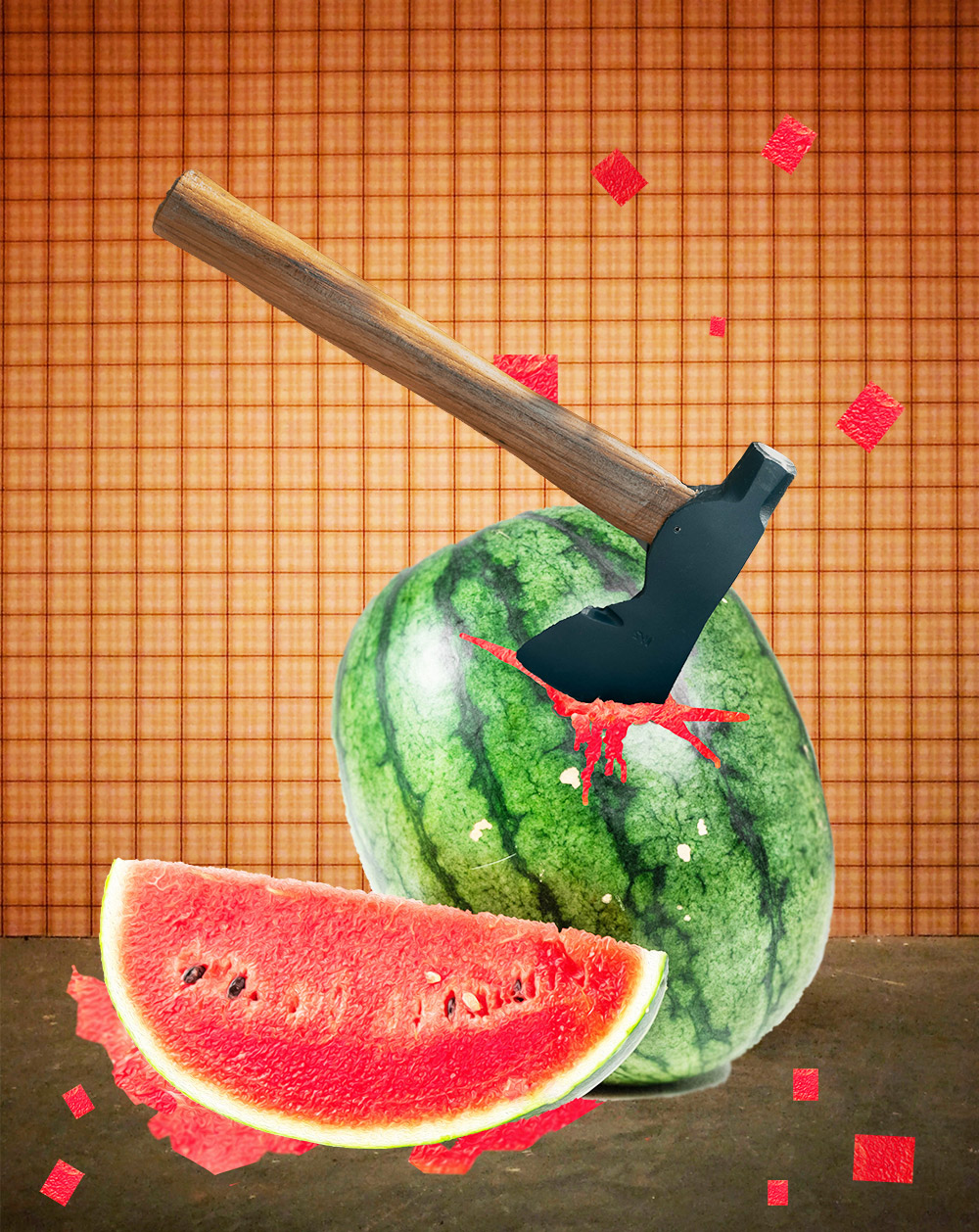
Despite its light, refreshing appeal, the Watermelon has a dark, dangerous history. The Watermelon has started riots and caused international squabbles. Some are so prized that people have risked death just to get their hands on one. In 2011, Watermelons started combusting in China, and throughout the world watermelons are caught up at the weirdest crime scenes. This is the watermelon’s untold story.